
What is organised Drug-Facilitated Sexual Assault (DFSA)?
Organised DFSA is a form of sexual violence in which alcohol and/or drugs are used to impair a person's ability to consent, often within a wider pattern of abuse involving coercion, control, manipulation or multiple perpetrators.
Unlike what is commonly understood as ‘spiking’, organised DFSA may occur repeatedly over time, is often perpetrated by someone known to the victim, and can involve networks of individuals who facilitate or participate in the abuse.
Organised DFSA is generally:
- Perpetrated by someone known to and trusted by the victim.
- Embedded within intimate partner relationships or domestic settings.
- Linked to wider patterns of coercive control and abuse.
- Repeated over time rather than occurring as a single event.
- Facilitated by multiple connected individuals.
- Associated with online groups where abuse may be encouraged, planned, shared or normalised.
How might someone feel or present if they have experienced or are experiencing DFSA?
Survivors may not identify their experience as DFSA and may experience:
- Memory gaps.
- Confusion about events.
- A sense that “something doesn’t feel right”.
- Repeated unexplained illness or sedation.
- Concerns about controlling behaviour within a relationship.
- Uncertainty about whether abuse occurred.
- Partial, fragmented or evolving disclosures.
Survivors may not realise they have been harmed until much later, and some may become aware only through police contact or other information.
The role of coercive control
Organised DFSA often exists alongside coercive and controlling behaviour:
- It may form part of ongoing domestic abuse.
- The abuse may be hidden within apparently established or trusted relationships.
- Trust and intimacy are frequently exploited by perpetrators.
The impact of organised DFSA
DFSA can be particularly traumatic because survivors may have little or no memory of what happened to them and may experience a profound loss of trust in their own perceptions and memory. This uncertainty can make it difficult to process the abuse, seek support or make decisions about reporting.
The trauma may be compounded where the perpetrator is someone known to the victim, such as a partner, friend or trusted individual. Survivors may be coping not only with the impact of sexual violence, but also the betrayal of trust, coercive control, manipulation and fear associated with ongoing abuse.
Where multiple people were involved, or the abuse was planned, shared or facilitated by others, survivors may experience heightened feelings of vulnerability, isolation, fear and loss of safety. The nature of organised DFSA can leave survivors questioning what happened, who was involved, and how long the abuse may have been occurring.
Important message for survivors
“If you think you have experienced DFSA, you do not need proof or certainty to access support or report to the police.
We know that many survivors of DFSA experience confusion about what has happened as well as gaps in their memory, however, this doesn’t mean that you won’t be taken seriously.
There is specialist support out there for anyone impacted by this type of sexual violence. You can contact our Helpline and Online Support Services for emotional support during opening hours. Alternatively, you can also contact the 24/7 Rape & Sexual Abuse Support Line which is open 24 hours a day, every day of the year.
You don’t need to go through this alone.”.Lisa Durston, Communications Manager (SARSAS)
You can read more about organised drug-facilitated sexual assault on the Rape Crisis England & Wales website.
The latest from our news and blogs
Meet the Team: Group Work
We caught up with Kathy, Group Work Coordinator at SARSAS, to explore what group work is all about, why it matters, and what you can expect when you take that first step and join a group.
Bristol and Clevedon’s Most Wuthering Heights Day Ever raises £1,983 for SARSAS!
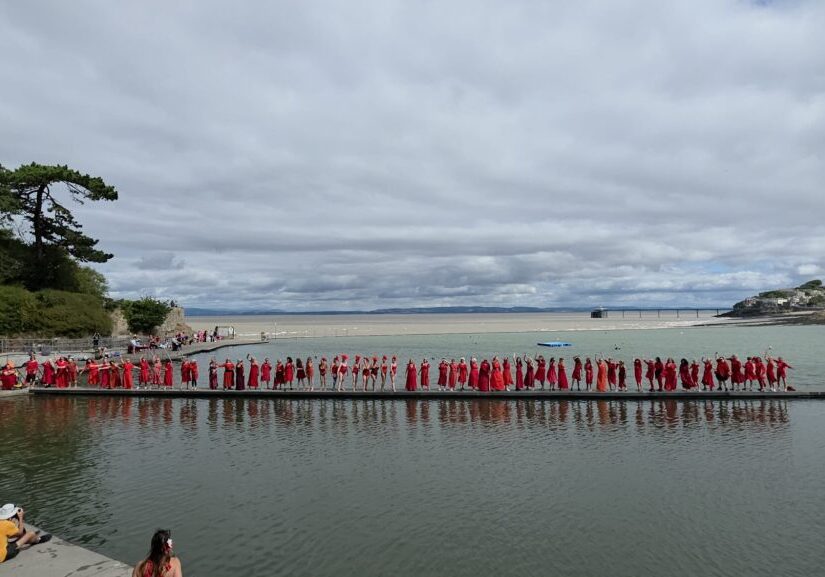
Out on the wily, windy waters of Clevedon Marine Lake a group of red clad Kate Bush’s danced and performed to Wuthering Heights. Followed by a second performance on Bristol’s College Green, the group made it clear that no moors or Heathcliff were required to make this event iconically The Most Wuthering Heights Day Ever.
A UK study on pregnancy after rape: Little Ro’s reflections & contributions (part 3)
Content note: This post shares themes from research with women who have raised a child conceived through rape. There are no graphic details, but some readers may find the material emotionally difficult. Please take care of yourself while reading, and feel free to pause or stop at any point.