Bad Experience, not Bad Character: campaign win
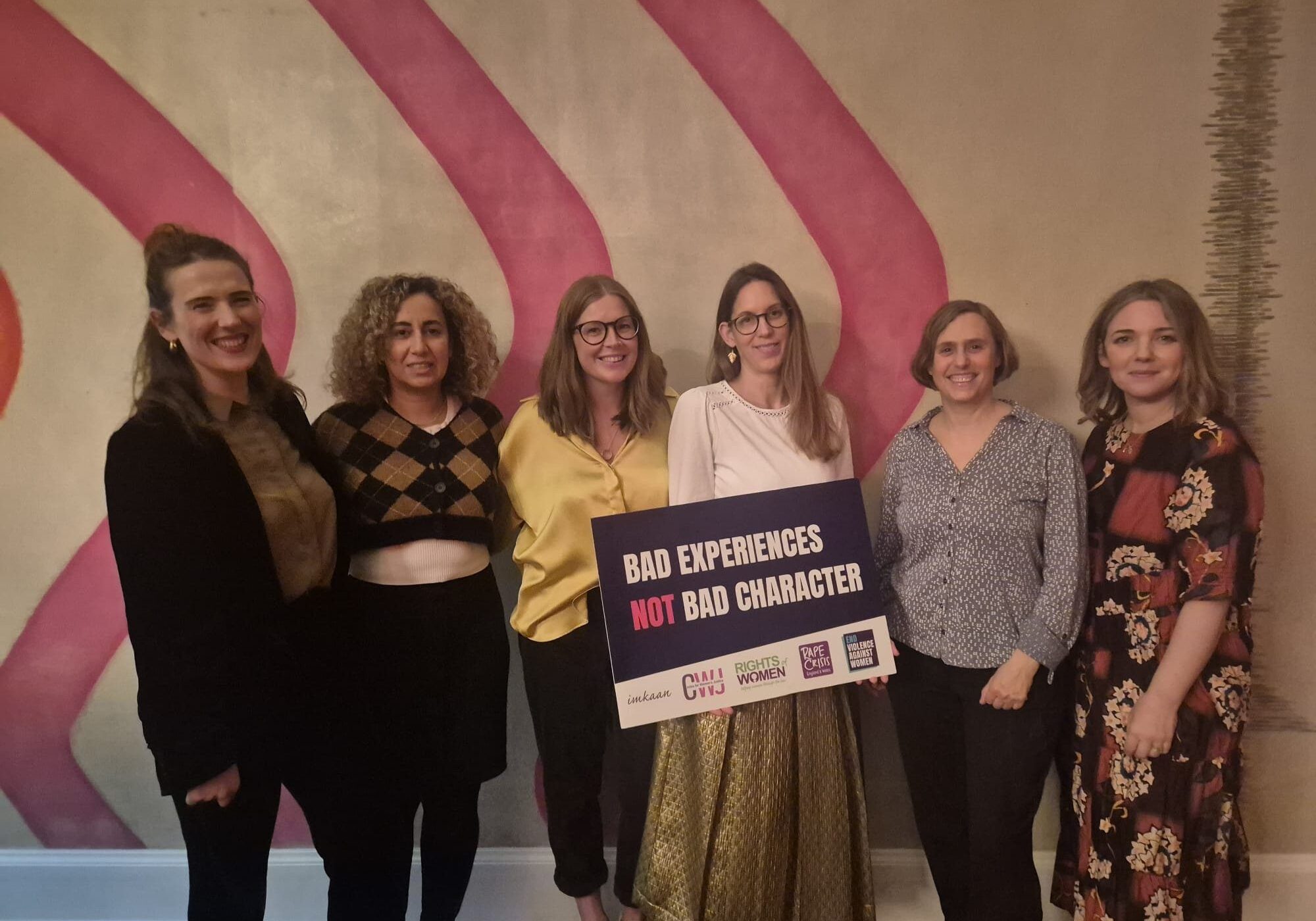
Earlier this year, Rape Crisis, along with Centre for Women's Justice, End Violence Against Women Coalition, Imkaan and Rights of Women, launched a joint #BadExperiencesNotBadCharacter campaign.
In this blog, Comms Volunteer Toby takes a comprehensive look at the campaign, sharing insights and behind-the-scenes perspectives.
On Wednesday 3 December the government announced that they will be making changes to forthcoming legislation to limit the use of so-called ‘victim bad character’ evidence.
This reform will mean survivors cannot be cross examined about unrelated experiences of violence or previous instances reporting rape to the police, which is currently used to undermine complainants’ (survivors) credibility in court.
Andrea Simon, Director of End Violence Against Women Coalition (EVAW) says:
“The criminal justice system has for too long been a site of re-traumatisation rather than justice, no more so than when defence lawyers attempt to use the previous, unconnected experiences of rape and abuse to try and discredit a victim. It is traumatising and unacceptable. Our Bad Experiences Not Bad Character campaign has pushed for this to change. We welcome the government’s commitment to restrict this practice, and await further detail on how this will be meaningfully implemented. This means not just changes in courtrooms but across the whole system. The fact is that many women will experience multiple incidents of sexual violence in their lifetime, so police and CPS cannot justify closing a case because a victim has had prior experiences of rape and sexual violence.”
What was the campaign about?
During the campaign, Rape Crisis England & Wales outlined the situation regarding the use of ‘Bad Character’ defence in UK courts:
‘When someone reports being raped, past disclosures of sexual violence – no matter how unrelated – can be used against them in court. Currently, a survivor could be questioned in front of a jury about a previous experience of abuse, even if it happened years earlier and was committed by a different perpetrator. In some cases, defence lawyers use this to argue the survivor is lying, claiming that having reported abuse before makes them less credible. Even when there is no basis to believe a previous disclosure was false, judges may allow such questioning. Cross-examination often happens unexpectedly—sometimes even when the survivor is already giving evidence. The impact can be devastating.’ 1
This harmful practice was applied inconsistently, leaving survivors unsure if this kind of questioning would occur during an already extremely challenging situation. The practice also failed to take into account the fact that 1 in 2 adult survivors of rape experience sexual violence more than once.2
What happened?
On 3 December, the government announced changes to forthcoming legislation to restrict the use of so-called ‘victim bad character’ evidence. This reform means survivors can no longer be cross-examined in court about unrelated experiences of violence or previous reports of rape to the police, practices previously used to undermine their credibility.
During the campaign, Katie Kempen, Chief Exec at Victim Support commented on the proposed law: “Too often victims are let down when navigating a criminal justice system which makes them feel like an afterthought. It’s encouraging to see them centred in this Bill, alongside some positive measures which have the potential to make a meaningful difference to victims.” 3
What else needs to happen?
But, further change is needed to end so-called ‘Bad Character’ evidence being used by legal defences:
The Victims and Courts Bill should be amended to provide judges with clearer guidelines on when a previous disclosure is admissible in the current case. This means amending section 100 of the Criminal Justice Act 2003 to state that there must be a proper evidential basis to assert that the previous disclosure was false.4
Guidance should also make clear that facts from earlier, unrelated disclosures of sexual violence do not, on their own, provide this evidence:5
That the victim/survivor did not report the incident to the police.
- That the victim/survivor did not support a prosecution following a report.
- That the police or CPS closed the case without charge.
- That the case was prosecuted and the accused acquitted (in this situation the jury could have concluded that he was probably guilty, but they could not be sure, so the criminal standard was not reached).
You can read more about the campaign here: ‘Bad Experiences, Not Bad Character’ Campaign WIN
This blog was written by Toby (SARSAS Communications Volunteer). Toby graduated from the University of York’s Law School in 2020, studying public and criminal law and now works for Bristol City Council.
- Bad experiences not ‘bad character’ | Rape Crisis England & Wales ↩︎
- Nature of sexual assault by rape or penetration, England and Wales – Office for National Statistics ↩︎
- Victim Support responds to introduction of Victims and Courts Bill – Victim Support ↩︎
- Criminal Justice Act 2003 ↩︎
- End ‘bad character’ evidence in rape cases, experts say | End Violence Against Women ↩︎
The latest from our news and blogs
Prisoners’ Early Release Scheme: what you need to know
If you’re a survivor, you may have seen news about changes to prisoner release arrangements and be wondering what they mean for you.