
Reflections from the other end of the helpline
I’ve been volunteering on the helpline for a year now, and I wanted to take a moment during Volunteers Week to reflect on what that experience has been like for me and what I've learnt along the way.
It’s been a year of listening, learning, and quietly sitting with people in all kinds of moments in their lives. But, if there’s one thing that stands, it’s that there is no such thing as a “typical” helpline call.
Every call is different
Some people I speak to are familiar voices, people I’ve spoken with before. Others are completely new, sometimes reaching out for the first time and perhaps sharing something they’ve never spoken about before. There’s no set script, just two people trying to connect in whatever way feels possible in that moment.
Why people pick up the phone
People often assume helpline calls are always heavy or distressing. And yes, some absolutely are. There are moments that are incredibly difficult to hear, especially when someone has experienced rape or sexual abuse and hasn’t had much support.
But a lot of the time, people just want to talk. Sometimes it’s about something that’s happened in their day. Sometimes it’s frustration or just needing to say things out loud to make sense of them. Sometimes it’s simply having a space where they don’t have to hold everything in on their own.
There’s also lots of lovely light moments. Moments of laughter, jokes, talking about hobbies, what brings people joy, and what techniques people have used to cope and get through difficult days (I’ve learnt a lot myself from our callers!)
So, if you’re ever sitting there thinking, “Is it worth reaching out? Is this even enough of a reason to call?”, it really is okay to just give it a try, even if it feels scary. You don’t need to have the “right” words or a big reason to start the conversation.
When talking feels difficult
Not every call begins with words. Sometimes we sit in silence at the start. During those calls, I’ll just gently let the caller know that I’m still there, and often that’s enough. There’s no pressure for someone to speak until they feel ready (if at all).
Other times, things feel too overwhelming to put into words. People might be crying or struggling to get anything out at all. In those moments, I often offer to take a moment for us to pause and breathe together.
It’s never about pushing the conversation. It’s about making sure people don’t feel alone in it.
Whatever it is: overwhelm, anxiety, rage, anger, sadness, confusion, shame, fear, or anything else, it’s all valid. There isn’t a “right” emotional response to difficult and traumatic experiences. And what I really want to let people know is that you don’t need to explain or justify how you feel before you’re allowed to talk about it.
In moments of crisis and beyond
Some people reach out in crisis, when something has just happened and everything feels raw and uncertain. They might not know where to turn or what support is out there. In those moments, we can talk through options available together and share information about other services if that feels helpful .
Other people have been carrying their experiences alone for years, sometimes decades. Some choose to say very little at first. Others begin to open things up slowly, in their own time. And some let it all out in a rushing torrent of words. There’s no “correct” way to do it.
There’s no “right” way to feel
People often wonder if what they’re feeling is “normal.” Maybe things have been building for a long time, and they’ve been trying to push it all down just to get through. Or maybe they’re feeling something new, like anger, for the first time, and it feels unsettling or confusing.
Whatever it is: overwhelm, anxiety, rage, anger, sadness, confusion, shame, fear, or anything else, it’s all valid. There isn’t a “right” emotional response to difficult and traumatic experiences. And what I really want to let people know is that you don’t need to explain or justify how you feel before you’re allowed to talk about it.
There is no single experience
One of the things that’s struck me most over the last year is just how different every person is (in age, background, gender, and life experiences). There is no single path that leads someone to reach out, and the reasons people call can vary widely.
For some, experiences of abuse may have taken place in childhood or adulthood, within families, communities, relationships, friendships, workplaces, or from strangers.
Because of that, no two calls are the same. Some are very short, others are long. One of the things I find hardest is letting people know when the call is coming to an end. Some callers focus on something very specific, while others are simply about needing space to talk and be heard. But the thread running through them all is the same, a need to feel listened to.
A year of learning to listen
Volunteering has changed how I think about listening. I’ve learnt that sometimes the most powerful thing is simply staying present and not rushing in to try and ‘fix’ a problem or fill a silence, as we’re often conditioned to do in everyday life.
As a survivor myself, it has been a privilege to sit alongside people in this way. I’m often in awe of the courage it takes to reach out, and I hope I can offer even a small amount of warmth and support in those moments.
A final message
If you’re reading this and haven’t reached out before, maybe because you’re unsure or wondering if it’s worth it, I hope this gives a small sense of what it’s like on the other end of the line.
There’s no pressure to say things perfectly or explain everything at once. You can take it at your own pace.
And honestly, if you’re wondering whether to reach out, you can always give it a try (remember, you can always hang up!)
You don’t have to wait until things feel unmanageable to deserve support.
Find more information or get in touch here: Helpline, e-support and live chat
The latest from our news and blogs

What is organised Drug-Facilitated Sexual Assault (DFSA)?
Organised DFSA is a form of sexual violence in which alcohol and/or drugs are used to impair a person’s ability to consent, often within a wider pattern of abuse involving coercion, control, manipulation or multiple perpetrators.
Meet the Team: Group Work
We caught up with Kathy, Group Work Coordinator at SARSAS, to explore what group work is all about, why it matters, and what you can expect when you take that first step and join a group.
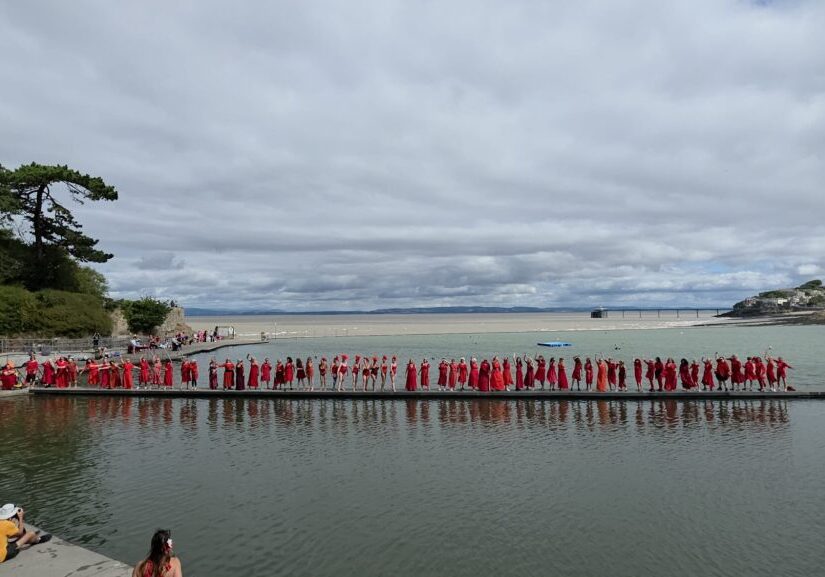
Bristol and Clevedon’s Most Wuthering Heights Day Ever raises £1,983 for SARSAS!
Out on the wily, windy waters of Clevedon Marine Lake a group of red clad Kate Bush’s danced and performed to Wuthering Heights. Followed by a second performance on Bristol’s College Green, the group made it clear that no moors or Heathcliff were required to make this event iconically The Most Wuthering Heights Day Ever.